
Everyone reads it in their own language
Chosen per person, not per company, so the office and the crew read the same job differently and neither is translating for the other.
How it works
Not a list of parts. This is the sequence a rental company already runs, with the screen that does each bit shown where it is actually used. Everything here is something the product does today.
01 — The phone rings
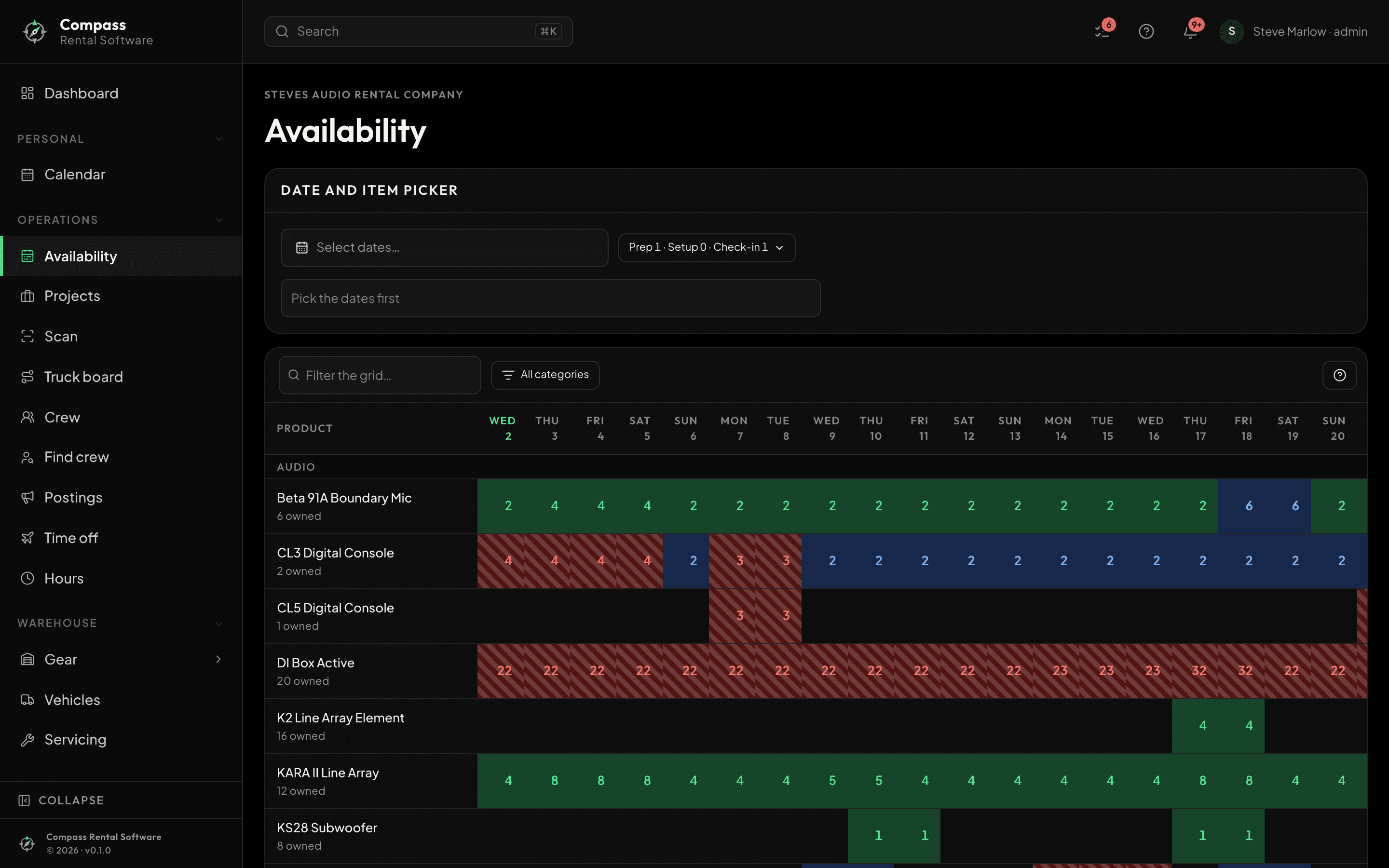
“Are you free the first week of September, and do you have twelve wedges?”
Answering that means knowing what is already promised — not on the two days of the show, but across every day the gear is out of the building. Ask on any dates and the grid says what is free, what is committed elsewhere, and what is still out on a truck.
Hired-in kit is counted apart from your own, because a shortage you solved by sub-hiring last month is not the same fact as owning enough.
02 — The quote
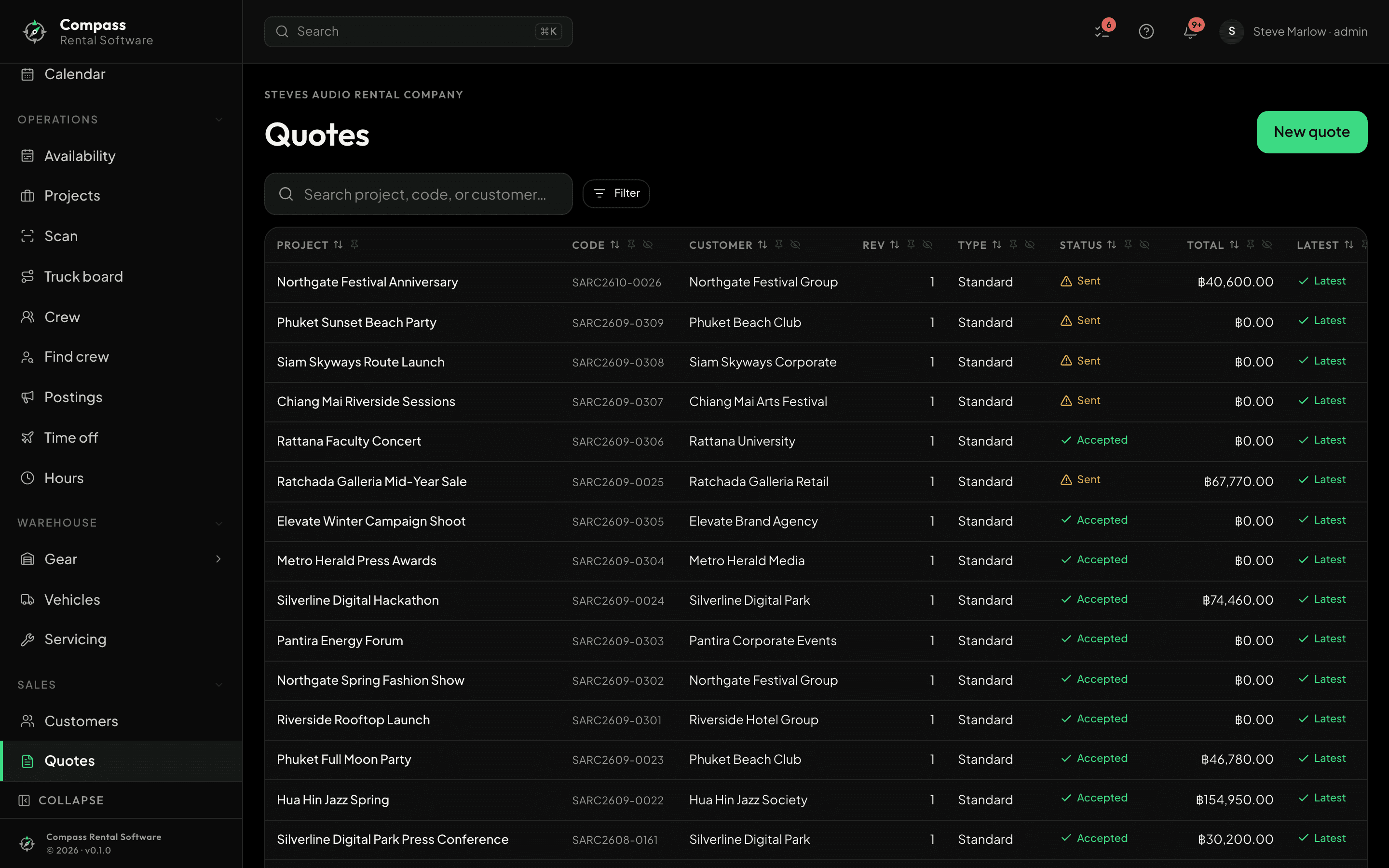
“What do we charge for three days, and did we remember the discount?”
Rate cards price by hire length, so a three-day booking is not simply three times a one-day one because somebody multiplied. Prep and strike days carry their own discount, which is where hand-built quotes usually leak money.
A revision supersedes the quote it replaces cleanly, so there is never an argument about which version was agreed.
03 — They say yes
“Have they come back to us yet?”
The quote goes as a coded link. Your customer opens it with no account, no password and no PDF, and answers on the spot — accept, decline, or ask for changes with a note saying what. They type their name against the decision, so there is a record of who agreed to what.
Accepting is not just a status. The job the quote was raised against moves on: the gear it lists is committed, the team is told, and nobody re-keys a thing into a project.
Hua Hin Jazz Spring
What happens on accept
04 — Prep
“What still needs to go in the case?”
A job at a given stage has one thing that can be done to it, so the job decides the screen rather than you. Scan by QR, barcode or RFID with the phone already in your hand, or tick it off when the label has gone.
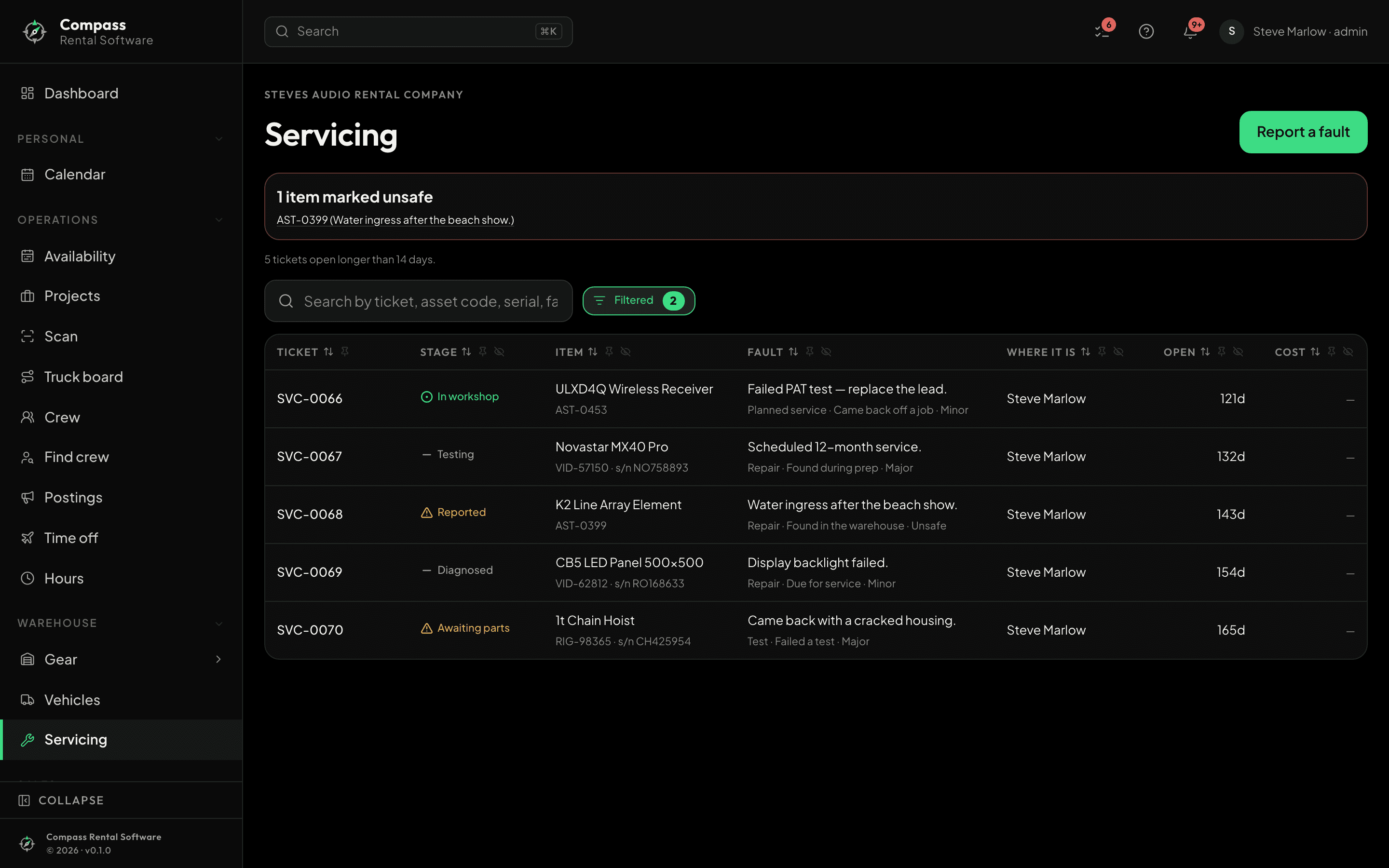
Anything flagged unsafe is refused at the bench rather than discovered on site, and a fault found while packing is reported from the same screen.
05 — Short
“We are two short — now what?”
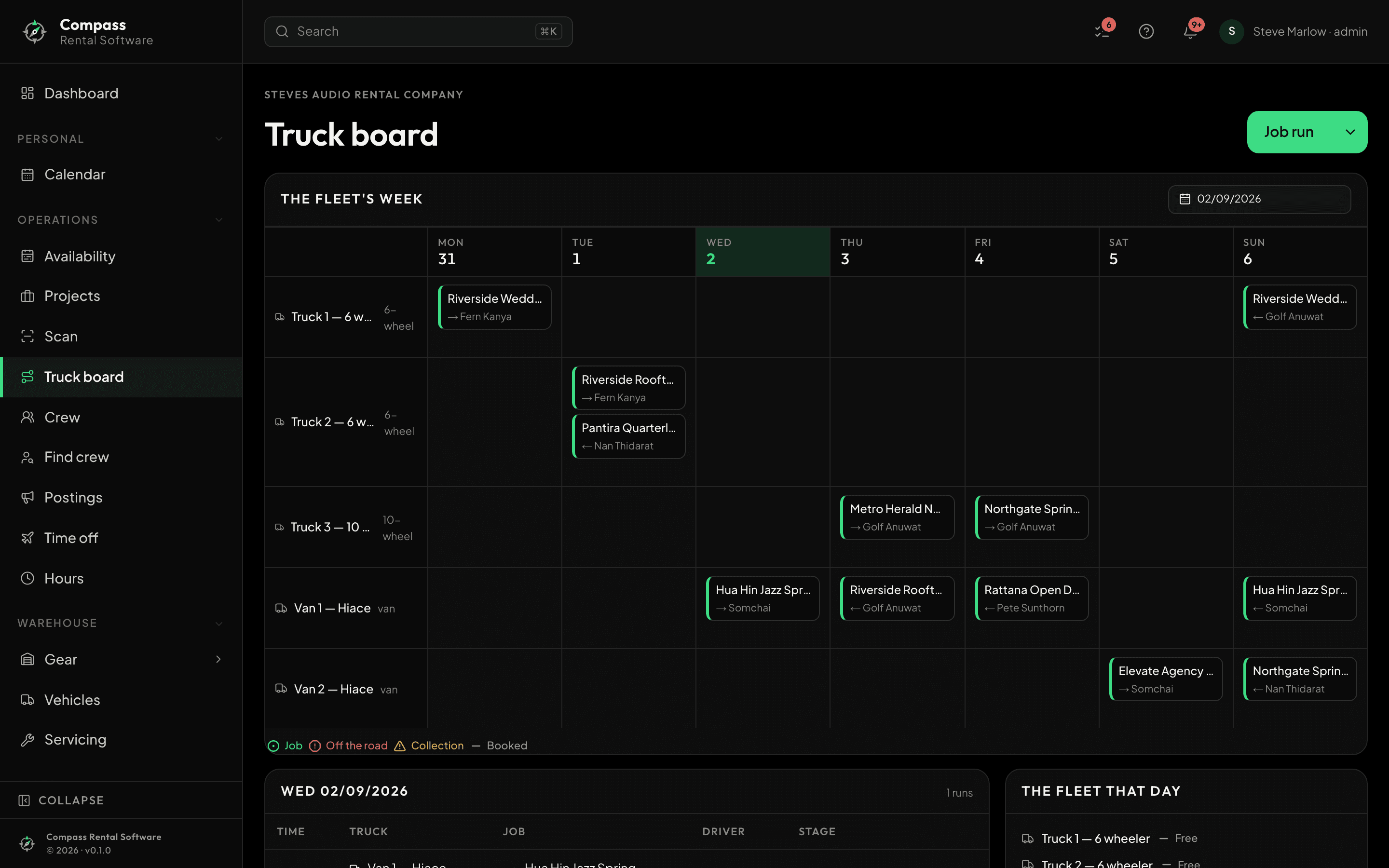
The shortage announces itself the moment it exists, over the dates that matter, and offers every way out from where you are standing: hire it in, buy it, or take it off the job. Hired-in gear becomes a real unit with a real label, so it scans and counts like everything else.
The crew gap works the same way. Put the call on the board from the job that has it, see who answered, and book them straight on.
06 — Out and back
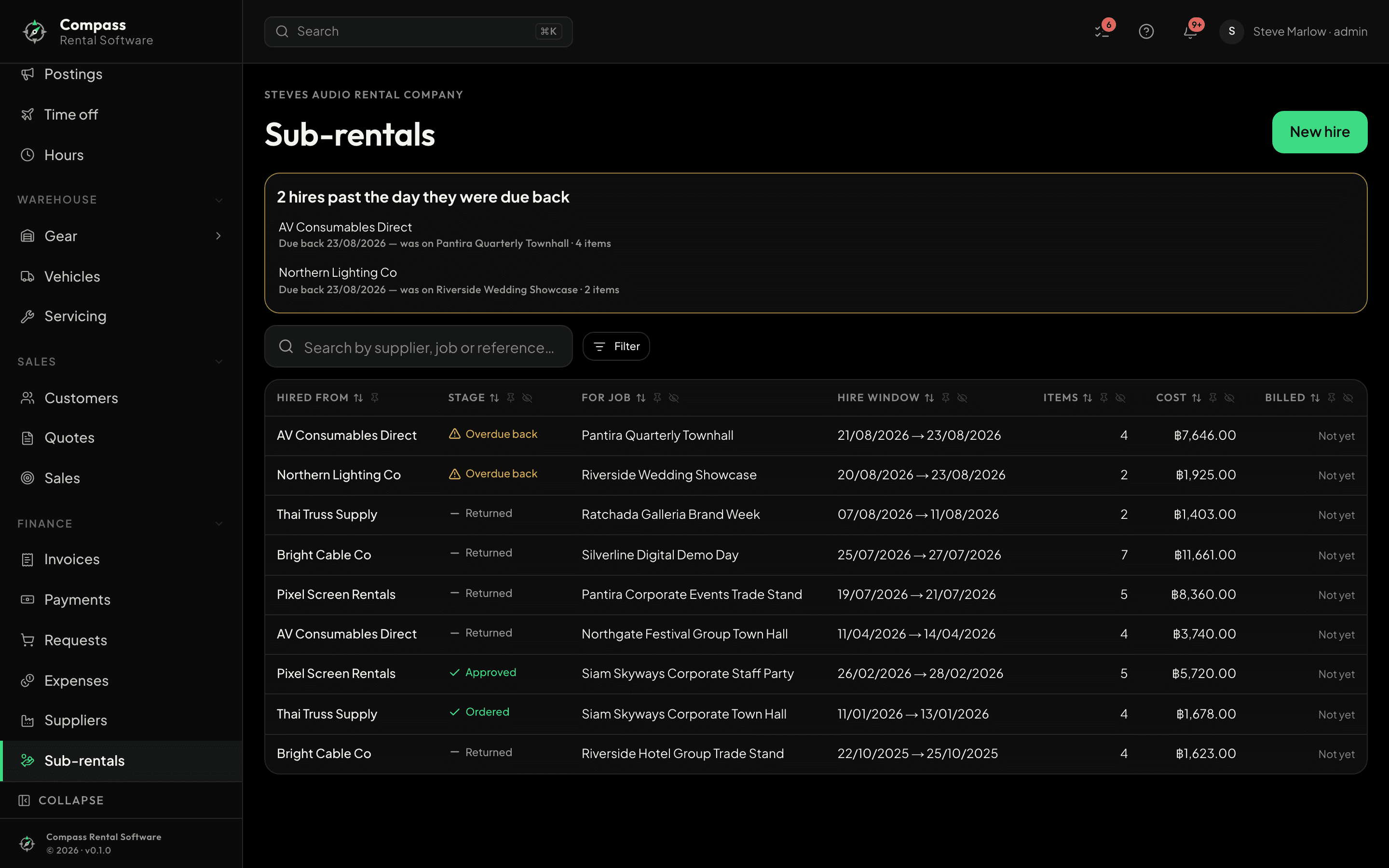
“Has it left, and is the truck home?”
Runs out and back, your trucks and hired-in ones side by side, with the ones still missing a driver called out. A run is one truck, one leg, one direction — which is how a board stays readable on a day with six of them.
The driver gets a note with a code on it and no login at all: one scan logs the delivery, another logs the truck home and opens the check-in.
07 — Check-in
“Is it all here, and can it go out again on Friday?”
Scanning back in is the same bench in the other direction. What is missing is missing against a job and a person, not against the whole warehouse in a month's time.
Damage is recorded where it is found. Gear goes off the road until it passes, and what the repair cost can be recovered from whoever broke it.
08 — The money
“Who owes us, and for how long?”
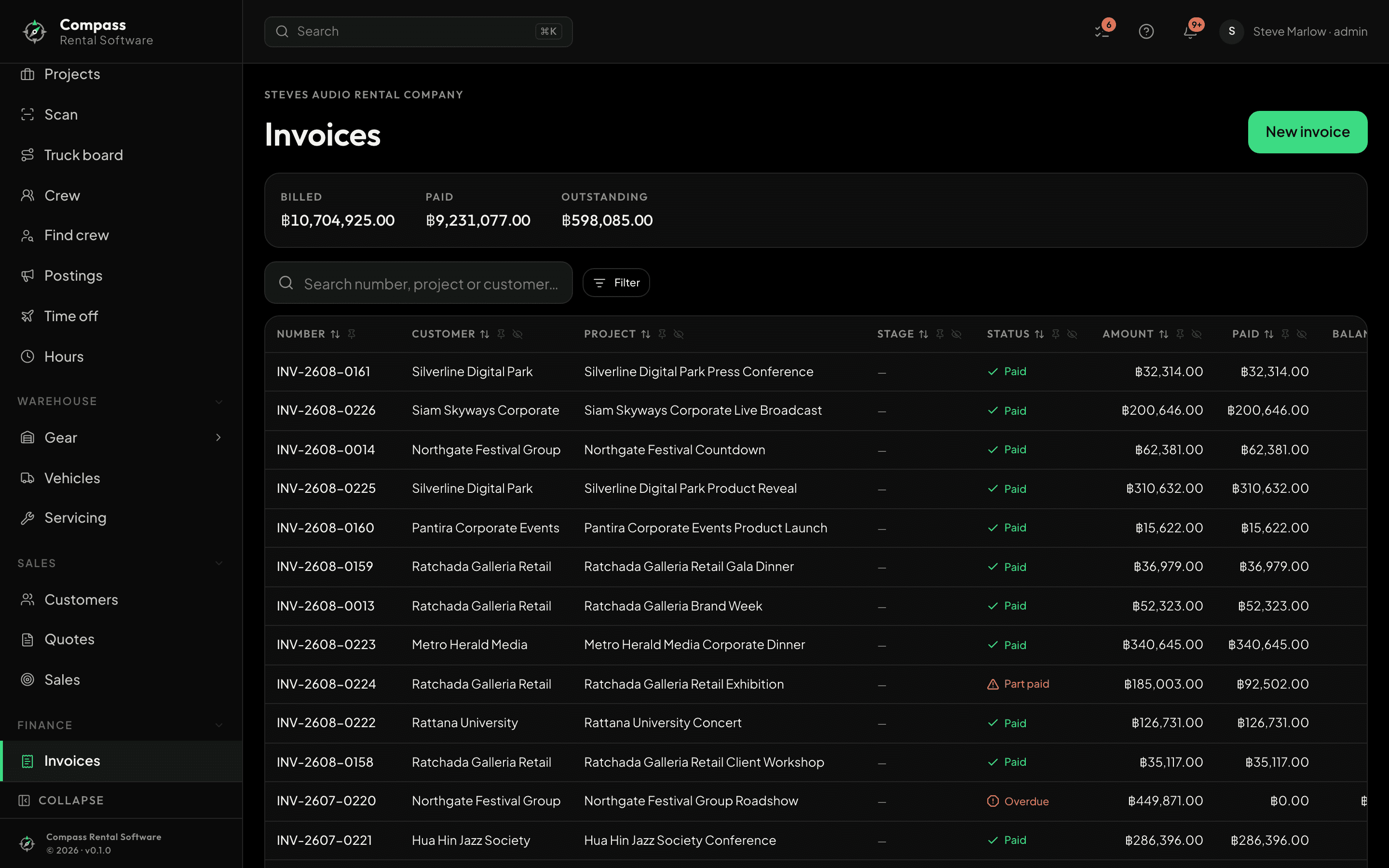
The invoice is built from the job that was actually done, and goes out as a link the same way the quote did. What is paid, what is overdue and by how many days sits on one screen rather than in somebody's memory.
And afterwards: what each item earned against what it is worth, which is the number that decides what you buy next.
Chosen per person, not per company, so the office and the crew read the same job differently and neither is translating for the other.
Run several businesses and switch between them. Kit, jobs, customers and staff stay strictly separate.
The people you book have their own board, jobs, calendar and invoices — free, and theirs rather than yours.
Each one waiting on somebody to approve it, and each one visible to the person it belongs to.